





2026-08-10
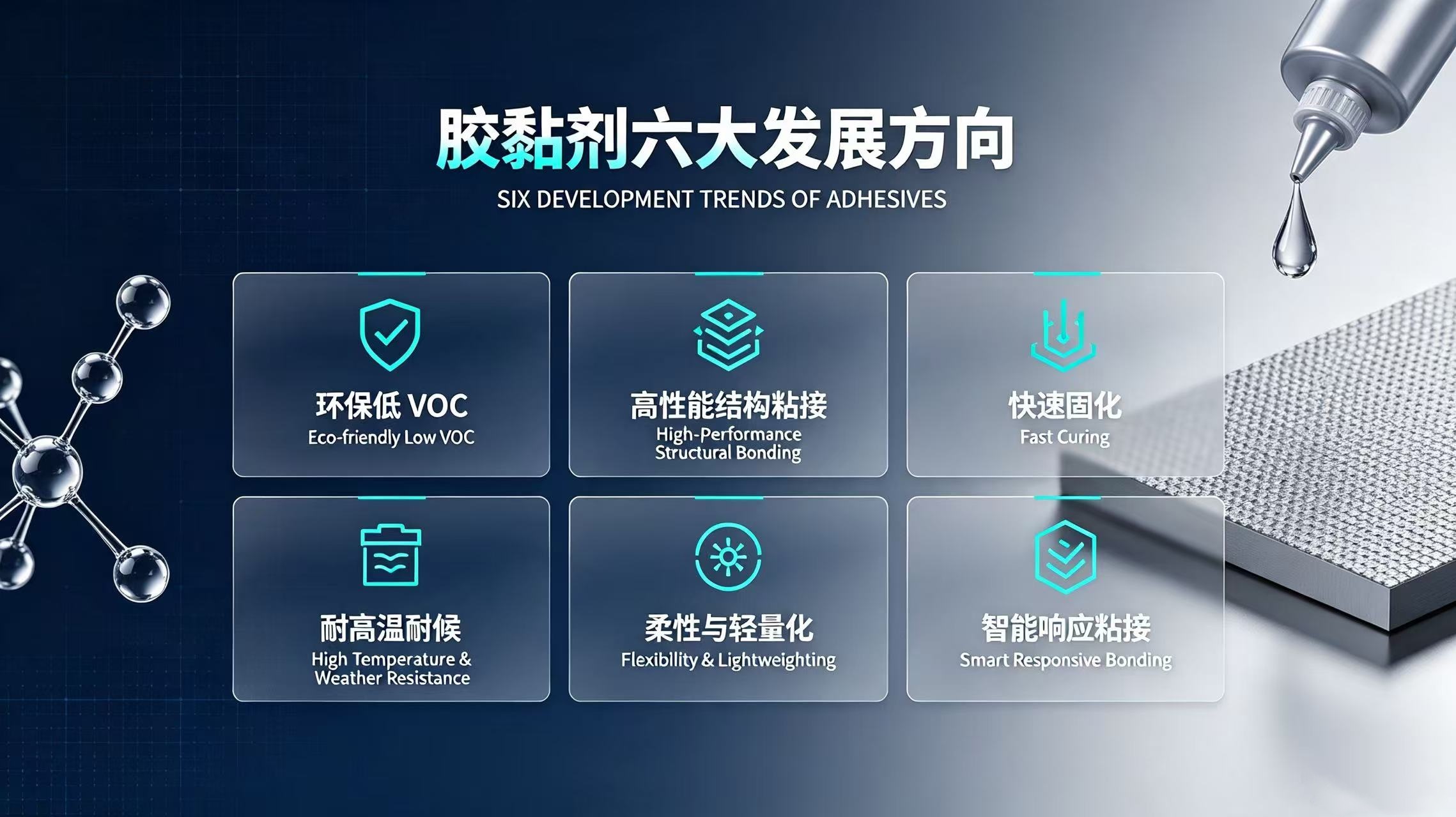
Six Major Directions for Adhesive Development
I. Low-Formaldehyde-Emission Urea-Formaldehyde (UF) Adhesives
These account for approximately 30% of my country's total synthetic adhesive volume. As environmental standards for wood-based panels become increasingly stringent, the market potential for low-formaldehyde-emission UF adhesives is immense. Foreign companies are already manufacturing these adhesives in my country while simultaneously establishing large-scale wood processing plants.
II. Hot-Melt Adhesives
These adhesives are solvent-free, offer rapid application, and provide excellent bonding performance. They represent the fastest-growing segment of the Chinese adhesive market in recent years and a key direction for future development. Beyond traditional EVA hot-melt adhesives, there is an urgent need to develop new varieties based on polyesters and polyamides.
III. Polyurethane Adhesives
Widely used in sectors such as footwear manufacturing, packaging, construction, and the automotive industry, polyurethane adhesives are considered one of the most promising types of adhesives in China due to their outstanding performance characteristics.
IV. Silicone Adhesives
In developed countries, silicone sealants are the primary choice for architectural sealing; in the coming years, they are also set to become the dominant type of sealant for the construction industry in my country.
V. High-Performance Epoxy Adhesives
Production of epoxy adhesives for the electronics industry and epoxy structural adhesives for the construction industry involves significant technical challenges; domestic products currently suffer from poor quality, necessitating a reliance on imports.
VI. PVC Plastisol Adhesives for Automotive Use
PVC plastisol adhesives are the primary sealants used in the automotive industry, accounting for approximately one-third of all automotive adhesives in my country. With an annual demand of around 10,000 tons, these adhesives hold promising prospects for future growth, driven by the continued expansion of my country's automotive sector—particularly the passenger car industry.